
Beyond the Sample: Louise Dobson-Trease on Building a Circular Future for Design
LOUD Library Founder and CEO Louise Dobson-Trease discusses the growing need for evidence-based sustainability, material traceability, and industry-wide collaboration to support healthier, lower-waste project outcomes.
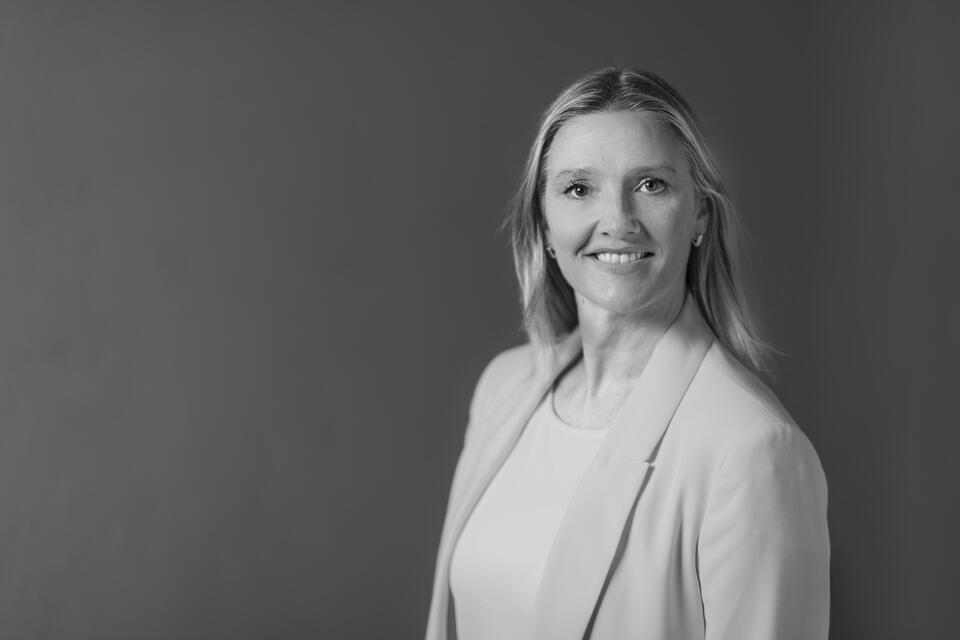
LOUD Library is one of Global GreenTag's industry partners. Founder Louise Dobson-Trease is a materials specialist who has dedicated the last 25 years to designing new products and services, specialising in Ceramics; creating homewares and commercialising new building materials.
In 2020, she founded the LOUD Library, a creative solution and quest to reduce the wasteful cycle of product samples generated by the specification process. Giving building manufacturers an avenue to prevent their resources from ending up in landfills, Louise built a circular economy enterprise that provides a solution to product sample waste. The LOUD Library is now growing a virtual repository containing high-quality digitalised product sample images. The resource makes selecting materials easier for architectural and design professionals, as it provides a comprehensive and easily accessible database of product samples. The library documents and stores historical data and product samples to museum archive standards from the beginning and into their retirement, ultimately, keeping them out of landfill.
We were keen to learn more about Louise in a series of questions. Importantly, how she has built an idea for a business that intentionally walks the talk. Here is what she had to say:
_________________________________
Louise's Origins, History & Personal Drivers
1. What early experiences or professional challenges first sparked your desire to build something like the LOUD Library?
The idea of collecting them and recirculating them started with a staple.
In 2007 I received a book from a colleague, How to change your workplace 9- 5, with the pages it suggested sustainable and cost saving ways to reduce waste in your workplace. On one page there was a statement "If every office worker in Australia saved one staple a day, that would be 88.3 tonnes of steel ending in landfills. (Ref: LOUD Library Book library: PI 060_00001, How to change the workplace 9 – 5, (Volume 2) 2007)
This made me think what do we do with the samples we distribute, what is the environmental impact and cost on our business if we didn't recycle them.
2. Before founding LOUD, what moments in your career most shaped your understanding of the gaps in sustainability knowledge and evidence?
Many assume my sustainability background started in the building industry, but it actually began with my first ceramic homewares business where we recycled clay in our production process. In 1996, after visiting an exhibition at Sydney's Powerhouse Museum, I dreamt of using solar panels on our factory to power our kilns. Although the technology wasn't advanced enough then, those early ideas sparked my interest in sustainability. Ten years later I commenced an educational role in presenting the lifecycle of bricks and it was here I saw how I had formed great relationships with other brick industry peers and we became a greater force of leadership by telling the same story for the greater good for out industry.
The idea of a sample library began when I questioned the environmental impact and cost of not recycling distributed samples. Although the industry wasn't ready for such a library in 2018, by 2022, sustainable practices were becoming a standard. By 2027, twenty years after considering the concept, I hope to see multiple library depositories established, demonstrating the value of persistence and timing in introducing new ideas so our industry innovates towards sustainable building faster.
3. Was there a single turning point—personal or professional—that pushed you to commit to launching LOUD?
When the pandemic began in 2020, I noticed during isolation with fellow Melbournians the need for a practical library rather than another marketing platform to hear about a product for those that could afford to advertise. I could see a birth of innovation and I consulted my global network to see how we could develop a business model that could drive sustainable practices in Art and Design.
I recognised that sample waste was a growing issue overlooked by industry leaders and authorities, and saw it as an environmental concern needing urgent attention. I attempted to launch the business idea 6 times. It wasn't in 2023 the idea was presented to the industry and built momentum to become a start-up initiative by 2024 that could transform sustainability from the start of a samples life to the end of life commencing a traceability of them in 2025.
4. Which values or principles guide your work most strongly, and how have they influenced the DNA of LOUD as a platform?
The core of our mission is to empower individuals to express themselves, particularly those who may lack the financial resources to do so. Our business model is fundamentally built around the sharing of knowledge and fostering a values-driven community with a focus on reducing environmental impact. We are committed to providing accurate information that enables everyone to move forward on the most effective and sustainable path possible.
Defining the LOUD Library
5. For those who are new to it, how would you describe the LOUD Library—what it is, how it works, and the role it is designed to play in the sustainability and built-environment ecosystem?
The LOUD Library is a pioneering platform designed to address the pressing issue of sample waste within the built-environment and design industries. At its core, the LOUD Library acts as a centralised depository and resource hub where material and product samples can be tracked, shared, reused, and eventually recycled, stopping them being discarded and ending up in landfill. For those new to the concept, LOUD operates by collecting surplus or unused samples from designers, manufacturers, and industry professionals, cataloguing them, and making them accessible for others who may need them for specification, education, or inspiration.
This model not only drastically reduces the environmental impact associated with sample waste, but also encourages a culture of sharing and circularity within the industry. By providing a transparent system for managing the lifecycle of samples, LOUD empowers everyone that uses them from students and designers to manufacturers and consumers to make more sustainable choices. The business is designed to close the loop on sample waste, ensuring that valuable materials are kept in use for as long as possible, and that their end-of-life is managed responsibly. In doing so, LOUD plays a vital role in shifting industry behaviour towards more sustainable and evidence-based practices, helping the built-environment ecosystem progress towards a lower-waste, more resource-efficient future.
Purpose & Vision of LOUD
6. LOUD champions "evidence-based" sustainability. How do you define high-quality evidence, and how do you guard against greenwashing?
LOUD champions "evidence-based" sustainability by ensuring that every material and product sample listed in its library is accompanied by robust technical documentation and verified data. High-quality evidence, in this context, means providing comprehensive information about a sample's origin, composition, environmental impact, and end-of-life options sourced directly from manufacturers, certification bodies, and industry experts.
LOUD's role as a centralised library is to curate and catalogue these samples alongside technical resources such as certifications, Environmental Product Declarations (EPDs), and independent case studies, enabling users to make informed decisions based on transparent, factual information rather than marketing claims.
To guard against greenwashing, LOUD implements a strict vetting process for all submissions, requiring supporting documentation from reputable third-party certifiers and adherence to recognised sustainability standards. Technical resources are cross-referenced, and only those products and materials that demonstrate genuine, measurable sustainability attributes are made accessible to the community.
This commitment to transparency and traceability ensures that users whether they are designers, students, or manufacturers can learn to build trust that LOUD has the evidence presented to the best we can collect with our global partnerships in place, helping to shift the industry towards authentic, responsible practices and away from superficial or misleading environmental claims.
7. Who is LOUD built for, first and foremost—designers, manufacturers, students, consumers—and how do their needs shape the platform?
A building materials library provides industry professionals with access to a wide variety of materials, much like how a book library operates. Its long-term benefits are mainly recognised by supply chain leaders. The library offers a complex array of resources. Builders in Tasmania must choose different materials than those used in Far North Queensland, but both regions encounter supply chain costs that can make sustainable options challenging.
Developing solutions throughout Australia cannot follow a one-size-fits-all approach, that's why LOUD was created to offer a community space for access over the advertising billboard space. Those who struggle to understand the concept often imagine something bigger than necessary, when the solution is actually much simpler and smaller than they realise, once they open the first page of our story.
8. What does long-term success look like for you—what industry behaviours or outcomes would signal that LOUD has fulfilled its purpose.
If every state had a depository and people valued samples instead of discarding them at the end of their life, the embodied energy they contain wouldn't be wasted. I think I could then sit back and know I helped with the process of this incremental change in design.
Partnership With Global GreenTag International
9. What drew you to partner with Global GreenTag International, and what strengths or rigour do you see in their certification programs?
By partnering with industry leaders, we aimed to advance the accreditation process and build strong business relationships in Australia. I was drawn to Global GreenTag International because their vision for accreditation includes biodiversity, not just material composition. As a startup, we needed support from established organizations who recognised the value of our programs and saw opportunities for collaboration.
10. How do GreenTag certifications, EPDs, PHDs, and other verified data formats integrate into LOUD's evidence ecosystem?
GreenTag certifications, EPDs, PHDs, and other verified data formats are seamlessly integrated into LOUD's evidence ecosystem, making it easier for the entire community to access technical data sheets. Accredited samples are clearly labelled, and all supporting documentation is connected and readily available, so users whether they're designers, students, manufacturers, or industry professional can quickly find and understand the relevant information.
11. Where do you see the LOUD x GGTI partnership having the most impact—in design decisions, manufacturer transparency, education, or policy alignment?
By streamlining access to this technical data, LOUD empowers community members to make informed, evidence-based decisions, inspiring ongoing innovation and accelerated adoption of sustainable practices across the sector.
12. What shared values between LOUD and GreenTag make the partnership work, and how do you see the collaboration evolving over time?
Collaboration is key to achieving lasting impact in the industry. By bringing LOUD and Global GreenTag together to create sample depositories, we're able to provide a shared space where clients can showcase their products and the design community can physically experience them.
This approach goes beyond digital platforms, emphasising the importance of touch and real-world interaction. Working side by side with organisations that share a commitment to sustainability fosters deeper understanding and inspires tangible change.
The true value lies in these partnerships when companies unite around shared values, they amplify their influence and accelerate the adoption of sustainable practices across the sector. Service is the key and by 2027 LOUD will have the physical locations along side Global GreenTag helping to vet each sample we introduce introduce into our system.
LOUD's Methodology, Impact & Future Plans
13. How do you curate or vet the materials, certifications, and case studies that appear in LOUD—and what qualifies something as "publishable" or eligible for listing product samples?
LOUD should curate and vet materials, certifications, and case studies through a robust, transparent process that prioritises both credibility and relevance. This should begin with a thorough review of all submissions to ensure they align with LOUD's values of sustainability, transparency, and innovation. Materials and product samples must be accompanied by recognised third-party certifications, such as Global GreenTag, EPDs, or PHDs, to verify their environmental credentials and performance claims. Each submission should include comprehensive technical data sheets and supporting documentation, which LOUD can cross-reference and make readily accessible within its evidence ecosystem.
For case studies, LOUD should assess not only the outcomes but also the methodology and data integrity, ensuring that published examples are both informative and replicable. A multidisciplinary review panel being established in 2026 is comprising sustainability experts, industry professionals, and academic advisors and can further strengthen the vetting process, providing diverse insights and upholding high standards for what is deemed "publishable".
Ultimately, eligibility for listing or publication should be based on criteria such as third-party verification, data transparency, innovative approaches, and tangible industry impact. By maintaining these rigorous standards, LOUD can build trust within the community and inspire greater adoption of sustainable, evidence-based practices across the sector.
14. What do you hope LOUD will enable in the next five years—greater industry literacy, healthier materials, nature-positive choices, or something else?
Australia has long been renowned for its resourcefulness and creative spirit, yet too often, brilliant ideas are held back by the tall poppy syndrome. At LOUD, we're determined to change that narrative. By offering a supportive platform where innovators, thinkers, and change-makers can thrive, LOUD empowers individuals to break through barriers and set new standards for what's possible in our industry. Here, greatness is celebrated, "Not cut down" and persistence and vision are recognised as the keys to real achievement.
15. What innovations or tools are you planning next for LOUD—API integrations, rating-tool mapping, manufacturer dashboards, or new evidence categories?
Joining LOUD means joining a community that values bold ideas and practical solutions. It's about helping each other rise, sharing knowledge, and turning local ingenuity into world-changing concepts. Whether you're seeking to challenge the status quo, contribute to healthier materials and nature-positive choices, or simply want to see Australia reclaim its place as a global innovation leader, LOUD is your launchpad. Together, we can foster an environment where every voice counts and every ambition is given the chance to flourish. Let's transform our nation integrate the rating tools and mapping for manufacturers to understand why to invest in sustainability. By joining LOUD and help shape a more innovative, sustainable future for all to share starts with each sample.
17. Ultimately, Louise, when you imagine LOUD in its most ambitious future state, what role do you want it to play in transforming the built-environment sector?
LOUD has to encapsulate a corporate structure whilst being flexible enough for small business owners to understand how we can offer a simpler process of understanding towards sustainability adoption.
LOUD will need to walk the talk show every part of the construction supply chain how we can all work collectively together to make a more sustainable ecosystem for us to survive. We see LOUD as brand that can push the boundaries, speak up, raise awareness and build traction with those innovating the industry forward by offering a simpler process so everyone in our industry has a voice and can be heard.
By enabling experts to concentrate on their areas of expertise, at LOUD we can efficiently manage the physical library of samples, an area in which we excel within the intricate ecosystem that the built environment presents. Market leadership needs to be created in collaboration with many to drive traction and LOUD can play the part in looking after each samples life.
How will you use GreenTag?
Manufacturers:
Make your product stand out, unlock the barriers to major markets.
Get Global GreenTag certification to stand out as a leader, differentiate your product from the pack and win in the rapidly expanding green marketplace.
Green consumers:
Create your own healthy, sustainable home, interiors and lifestyle.
Discover our work with the Beauty & Personal, Cleaning and Building & Interiors industries or find out more about GreenTag.
Global GreenTag certified products pass the world's toughest standards to protect you, and your family's health and safety, minimise your impact on our finite planet and put the power of selection back in your hands.
Professionals:
Save time and money selecting products that deliver and protect your business from risk.
Find out how Global GreenTag certified products pass the worlds toughest standards for health, eco performance and safety.
Recognised by major green rating schemes, GreenTag is your one-stop certification to choose for evidence product selections.