
Designing for Tomorrow: Greg Natale on Certification, Circularity & Conscious Spaces
How one of Australia's most celebrated designers is reshaping the future of luxury through responsible materials, certified products and timeless thinking. Jump into this interview with Greg Natale, a multi-award-winning Australian designer who designed a unique hotel room called the Conscious Luxe Suite, using products certified by Global GreenTag for the NoVacancy Hotel+Accomodation Expo 2025.
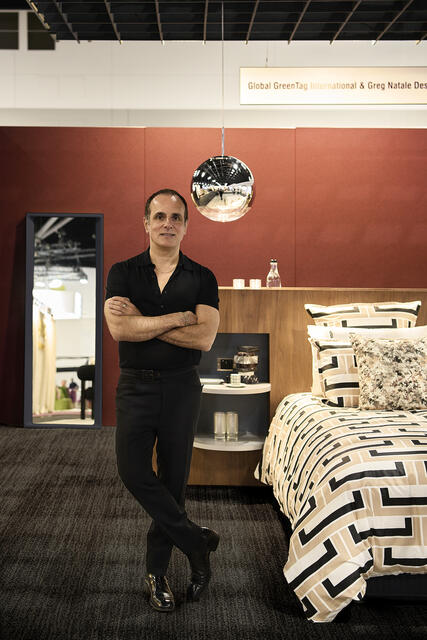
When Global GreenTag's Sales and Business Development Manager, Tyann Scott, asked her long time industry associate, award winning Australian interiors and product designer, Greg Natale to help GreenTag build a room showcasing products with sustainability certifications for the NoVacancy Hotel+Accomodation Expo in Sydney, Greg was on the other side of the world, juggling in his masterful way projects spanning from the US to Australia.
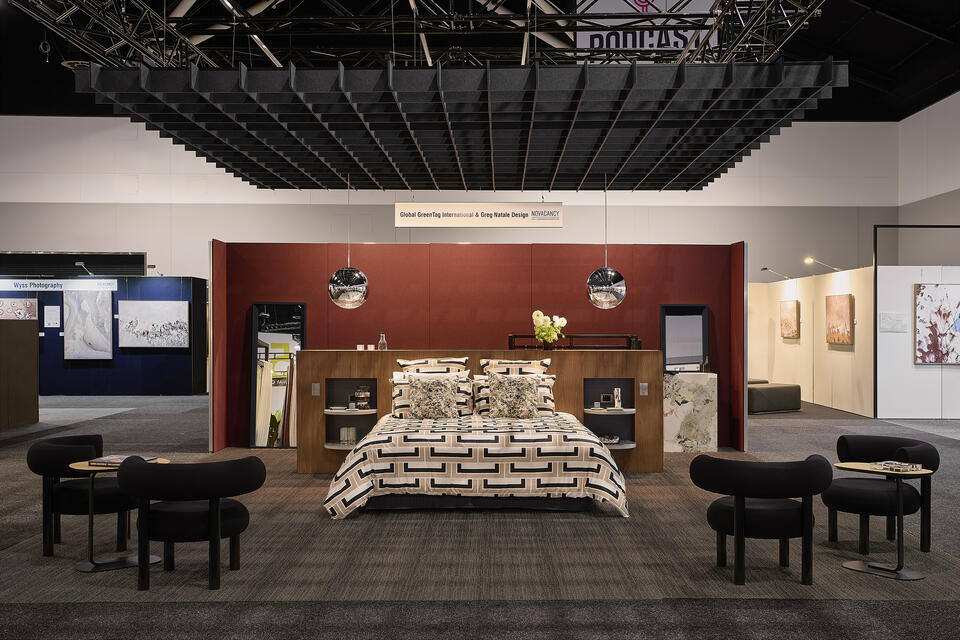
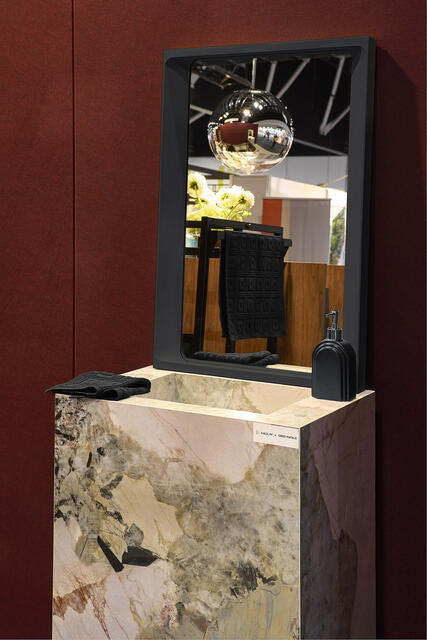
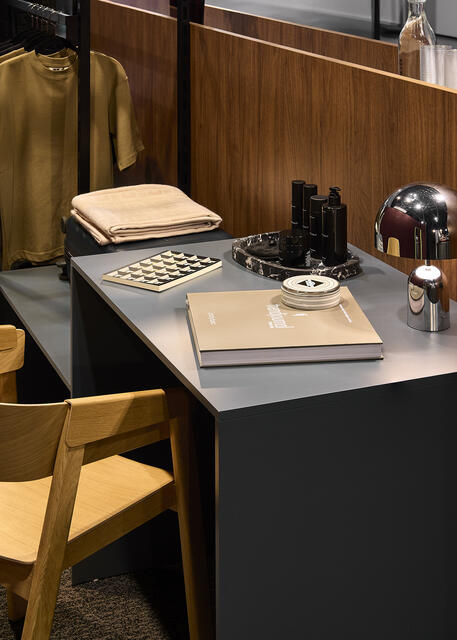
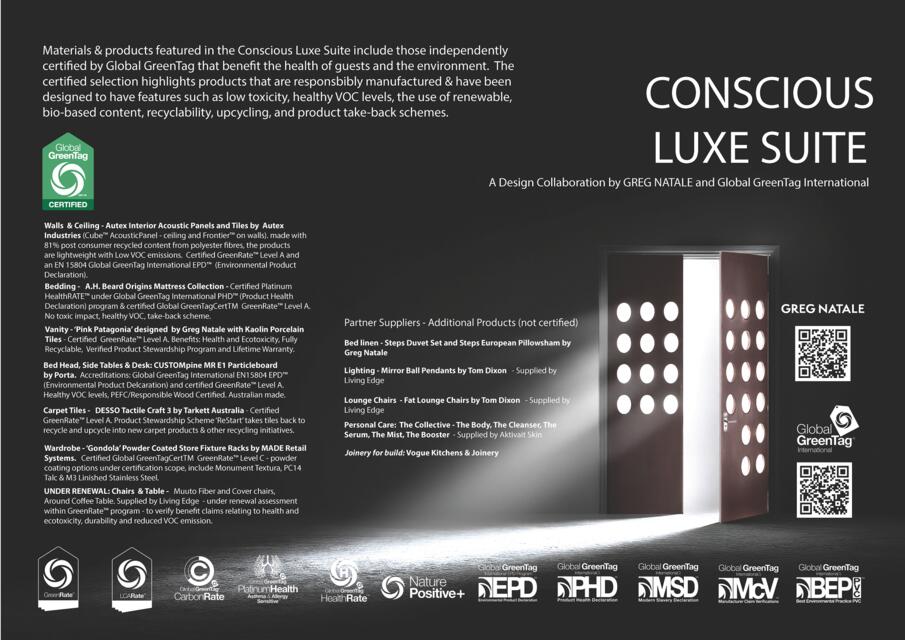
Greg was busy yet when Tyann laid out the importance for designers to advocate and support the use of materials by manufacturers who have committed to sustainable and ethical benchmarks in product manufacturing - Greg said yes to the challenge. The result (produced in six weeks) was to say the least - amazing - a highlight of NoVacancy 2025 and a tribute to the work of progressive manufacturers and suppliers, whose GreenTag Certified, Declared and Verified class products were used for the build. These included ranges by Autex Industries, Desso/Tarkett, Porta, A.H. Beard, Kaolin Tiles, Muuto, Living Edge and MADE Retail Systems.
Greg Natale continues to be recognised by the industry, recently receiving another design award in the 2025 Australian House & Garden Top 50 Rooms Awards and becoming inducted by Belle Magazine into the Belle Hall of Fame.
We approached Greg again to do the following interview to explore his creative vision, to see how it engages with the challenges and opportunities of sustainable design—and how the decisions behind the beauty, often invisible to the eye, can shape not only remarkable spaces but also brighter futures.
In this interview with GreenTag's Debra Robertson, here is what he said:
_____________________________________________________________
1. Sustainability Woven Into Luxury:
Greg, your interiors are renowned for their bold use of pattern, layering, and luxurious finishes. How do you reconcile this aesthetic richness with the growing demand for sustainable and low-impact material choices in design?
Greg Natale:
It used to feel like a contradiction in luxury residential design. On one hand, clients wanted richness, indulgence, and timeless finishes, while on the other, sustainability was seen as limiting or compromising. But that's changed. Today, the two are no longer mutually exclusive. Education and awareness are higher, both in the industry and among clients. People now understand that sustainability isn't an afterthought, it's an integral part of modern living.
For me, it's about working with the best suppliers and makers, the ones who are investing in innovation. Whether it's FSC-certified timber, stone sourced with a low environmental footprint, recycled glass mosaics, or rugs woven from sustainable fibres, the quality and craftsmanship are still there. In fact, these materials often come with more story and integrity, which adds to the sense of luxury.
2. The Designer's Journey:
Before we go deeper, I'd love to step back to your own story. What first drew you into the world of design, and what has kept you so captivated and creatively energized throughout your career?
Greg Natale:
I knew I wanted to be an interior designer from the age of ten. I have older sisters, and I used to stay up with them to watch Dynasty. Not so much for the drama, but because I was completely in love with the set design. Those interiors were glamorous, bold, and larger-than-life, and I realised how much storytelling happens through space. From there my love for all facets of design grew, from fashion, art, architecture. I never looked back.
What's kept me captivated throughout my career is that design is never static. It's constantly evolving, and with each project I get the chance to weave together references, layer new influences, and come up with innovative solutions.
3. Invisible Design Decisions:
Often, sustainability in interiors comes down to hidden elements—adhesives, sealants, fabrics' backings, and finishes. Do you believe these "invisible" design choices are as crucial as the visible ones, and how do you approach that balance?
Greg Natale:
Yes, absolutely. The invisible choices are just as crucial as the visible ones. They're what hold the design together. You can have the most beautiful finishes, but if the adhesives, backings, or sealants aren't safe or sustainable, then you've missed the mark.
For me, it also extends beyond materials to the fundamentals of a space. A well-considered floorplan can maximise natural light, encourage cross-ventilation, and reduce the need for artificial lighting or cooling. These are strategic design decisions that don't always announce themselves but make a huge difference to how sustainable, safe, and comfortable a home really is. The details people don't immediately see or consider are just as important as the ones they do, and when both align, that's when a design truly feels resolved.
 :
:
4. Circular Luxury:
Luxury has often been associated with permanence rather than disposability. Do you see a pathway for circular design principles—reuse, refurbish, recycling—within the luxury interiors market, and how might that evolve?
Greg Natale:
Most certainly. I won't allow my clients to opt for cheap options with short lifespans. If you do your research and invest in quality pieces, whether that's furniture, stone, or joinery, your interiors will endure and often become more beautiful with age. That's the foundation of circular design: creating homes that last, rather than feeding a cycle of disposability.
There's also a growing awareness in the luxury market around refurbishing and reimagining. A vintage piece can be reupholstered in a sustainable fabric, a marble offcut can be transformed into an accessory, or a family heirloom can be given new life within a contemporary setting. These practices not only reduce waste but also add richness and narrative to a project.
The future of circularity in luxury design is about moving away from trends and the "fast fashion" mentality, and toward timeless pieces made to last. True luxury is about longevity.
5. Product Alchemy:
When designing your collections, how much of the process involves sourcing or developing materials that carry certifications like Global GreenTag, and do you see product certification as an essential design tool or more as a client-driven demand?
Greg Natale:
I think it's both. Certifications like Global GreenTag are incredibly useful because they make it easier for designers and clients to integrate sustainable practices right from the beginning. They provide a clear framework and reassurance that the materials we're working with meet high environmental and health standards.
For me, certification isn't just about responding to client demand, it's about responsibility. As designers, we have an obligation not only to the environment but also to the health and safety of our clients, who place their trust in us. Working with certified products helps ensure that the beauty of a space is matched by its integrity and wellbeing.
6. Designing Spaces vs. Designing Products:
You are celebrated not only for your interiors but also for your product designs. How does your approach shift when you move from shaping an entire environment to creating individual pieces, and where do you see the biggest opportunities for sustainability in each?
Greg Natale:
Yes, the approach is quite different, but the essence is the same. When I'm designing an interior, there's an abundance of choice. In Australia alone, we can source finishes, furnishings, and materials that are sustainably produced and beautifully made. When it comes to creating products, you're responsible for everything, from the material composition to the method of manufacture, the lifespan, and even the recyclability of the piece.
In interiors, I see the biggest sustainability opportunities in how we plan and specify, from layouts that maximise natural light and airflow to selecting finishes and furnishings that are responsibly sourced and built to last. In product design, the opportunity lies in material innovation. Whether it's certified timbers, recycled metals, or sustainable composites, products allow you to directly influence how something is made and how it will endure.
 :
:
7. The Psychology of Green Spaces:
Design, at its core, shapes how we feel in a space. How do you think incorporating sustainable products and ethical sourcing affects not just the environmental footprint, but also the psychology of the people who inhabit those spaces?
Greg Natale:
This is such an important point. Considering the psychology behind spaces is central to design. There's a real connection between sustainability and wellbeing.
When you use natural, responsibly sourced materials, and you know your home isn't filled with toxins, it creates a sense of comfort and peace of mind.
It's also about synchronicity with your surroundings. Spaces that feel connected to nature, whether through light, air, texture, or material choice, tend to feel healthier, calmer, and more restorative. Sustainability isn't just about reducing environmental impact; it's about creating environments where people can truly thrive.
8. Tradition vs. Innovation:
Your work often celebrates classical and historical motifs. How do you integrate these timeless influences with new sustainable technologies and products without compromising your aesthetic vision?
Greg Natale:
It's not hard to do this nowadays. With the availability of sustainable materials, it's become much easier to integrate classical motifs with contemporary innovation. Parquetry, stone, mosaics, these traditional elements can now be sourced or produced in ways that are more responsible, whether that means FSC-certified timber, recycled glass, or low-impact stone.
For me, it's about honouring the timeless influences I love while using the best of today's technology to realise them. Sustainability doesn't have to compromise the aesthetic, and it can add another layer of meaning. When you combine heritage with innovation, you end up with spaces that feel both enduring and relevant to the world we live in now.
9. The Designer's Responsibility:
Do you believe designers like yourself hold a moral obligation to lead clients toward greener choices—even if it challenges their initial expectations of luxury?
Greg Natale:
Yes. As designers, we have a responsibility to lead the conversation. Clients come to us because they trust our expertise, so it's our role to guide them toward choices that are not only beautiful but also responsible.
Sometimes that means challenging initial expectations of what "luxury" looks like. True luxury isn't about excess or disposability, it's about craftsmanship, longevity, and integrity. Helping clients see that sustainable choices align with those values is part of our job.
At the end of the day, design isn't just about aesthetics. It's about the impact we as designers leave on the environment, on the wellbeing of the people who live in these spaces, and on the future of design itself.
10. Patterns of the Future: Your design language is bold and maximalist. If sustainability demands restraint and efficiency, how do you foresee your signature style adapting—or resisting—that push toward minimalism?
G: At the end of the day, I'm a modernist. The maximalist spaces I create are for true maximalists at heart. I craft those bold spaces for people who won't tire of layers that are thoughtfully composed and built to last.
All of my clients want efficient, functional spaces, but efficiency doesn't mean stripping back character. Sustainability isn't about minimalism. It's about making conscious choices. You can still embrace bold pattern, colour, and layering, as long as those elements are crafted from quality materials, responsibly sourced, and designed with longevity in mind.
When the layers are made to last, they're not wasteful, they're timeless. Even what we did with the Conscious Luxe Suite is a testament to that: it showed that you can create something immersive and layered while still holding sustainability at its core.
11. Global Collaboration:
Given that sustainable certifications and standards like GreenTag are international, do you see global alignment as an opportunity for a unified design language—or will cultural differences in aesthetics and values always keep "green luxury" a localized story?
Greg Natale:
I see it as both. Global certifications like GreenTag are incredibly valuable because they provide a common language and standard of trust. They give designers and clients confidence that materials are safe, sustainable, and ethically produced, no matter where they come from. That kind of alignment helps elevate sustainability from being a niche consideration to an industry norm.
At the same time, design is inherently cultural. What feels like "green luxury" in Europe, for example, may look very different to Australia or Asia because our histories, climates, and aesthetics are so varied. I think the opportunity lies in marrying the two: global standards that ensure responsibility, paired with local traditions and aesthetics that give projects their character and soul.
In the end, sustainability is universal, but design will always be about context. And that's what keeps it interesting.
12. Legacy Thinking:
If you could design a "legacy project" that embodies both your design ethos and the principles of sustainability—something that future generations could look back on—what would it look like?
Greg Natale:
For me, a true legacy project would be a building designed to last, with a clean, timeless form, rich in natural light, and seamlessly integrated with its environment. I'm very drawn to the eco-integrated architecture of innovators like Carlo Scarpa, where buildings feel as though they belong to the landscape rather than impose upon it. I also picture something in the spirit of Frank Lloyd Wright, one of my all-time favourite architects, whose work demonstrated how structure and nature can coexist in harmony. His desert home and studio, for example, used thick stone walls to absorb heat during the day and release it at night, maintaining a comfortable temperature throughout the day with minimal mechanical systems.
The interiors would be crafted from ethically sourced natural materials such as timber and stone, layered with finishes that honour both sustainability and beauty. I've always loved terrazzo, which is inherently circular as it takes old, recycled pieces of stone and marble and repurposes them into a durable, enduring surface. Large windows and open floor plans would further connect the interior with the exterior, allowing nature to flow seamlessly into the living space. The furniture would be timeless and durable, a carefully curated selection of pieces designed not only for the present but also with the intention that future generations would want to keep, refurbish, and continue living with.
Ultimately, it would be a project that embodies longevity and elegance, a place where design, sustainability, and heritage come together as one.
 :
:
Final closing question:
If you could leave industries (like A&D or Retail) with one directive—one bold move that marries unmistakable luxury with verifiable sustainability—what would you challenge designers, brands, and clients to do starting tomorrow?
Greg Natale:
My challenge would be to stop putting sustainability in the "too hard" basket and start treating it as the baseline for interior design. From tomorrow, every choice should be measured not only by how it looks, but by how responsibly it's made, how long it will last, and what legacy it leaves behind. Luxury has always been about rarity, craft, and integrity. Let's make sustainability part of that definition so the most desirable spaces and products are also the most responsible.
Thank you, Greg!
Visit the Greg Natale website: www.gregnatale.com/
Greg Natale bio:
Greg Natale is a multi-award-winning Australian designer and the founder of his eponymous firm, established in 2001. Celebrated for his layered, meticulously curated interiors, Greg Natale has become one of Australia's leading voices in design, with projects spanning residential and commercial sectors. His practice offers a complete service across architecture, exterior and interior design, and decoration, tailoring every project to the individual client. Celebrated for his innovative use of colour, texture, and geometry, Greg weaves classic and contemporary references into spaces of enduring sophistication.
Natale's work has been featured in Architectural Digest, Vogue Living, Elle Decoration and Vanity Fair. His accolades include Belle Interior Designer of the Year (2011, 2014), House & Garden's Room of the Year (2021) and High Point Market's Luxury International Designer of the Year (2016). He is the author of three internationally published books: The Tailored Interior (2014), The Patterned Interior (2018) and The Layered Interior (2022). He continues to expand his practice with a product line available worldwide through leading retailers including David Jones, Bergdorf Goodman and Lane Crawford, as well as his flagship Sydney store.
 :
:« 1/12 Global GreenTag EPD team presents at 12th Australian Conference on Life Cycle Assessment
How will you use GreenTag?
Manufacturers:
Make your product stand out, unlock the barriers to major markets.
Get Global GreenTag certification to stand out as a leader, differentiate your product from the pack and win in the rapidly expanding green marketplace.
Green consumers:
Create your own healthy, sustainable home, interiors and lifestyle.
Discover our work with the Beauty & Personal, Cleaning and Building & Interiors industries or find out more about GreenTag.
Global GreenTag certified products pass the world's toughest standards to protect you, and your family's health and safety, minimise your impact on our finite planet and put the power of selection back in your hands.
Professionals:
Save time and money selecting products that deliver and protect your business from risk.
Find out how Global GreenTag certified products pass the worlds toughest standards for health, eco performance and safety.
Recognised by major green rating schemes, GreenTag is your one-stop certification to choose for evidence product selections.